Sepúlveda / Jackson
Automatic expungement within 30 days when a person is released without formal charges, no probable cause is found, or the case is dismissed.
When police arrest the wrong person, or charges are dropped or never filed, the arrest record should clear itself. No forms. No fees. No waiting. That is the #AutoErase™ idea.
Outside the U.S.? South Africa, Kenya, UK, France, Jamaica, Trinidad & Tobago, Canada ↓
Or see the 50-state map · every state, one by one
Note: autoerase.org is not a law firm, and its AI is not a lawyer. This is general information, not legal advice. The final decisions are yours, or a licensed attorney's. Free legal aid may be available in your state. Find free legal aid in your state →
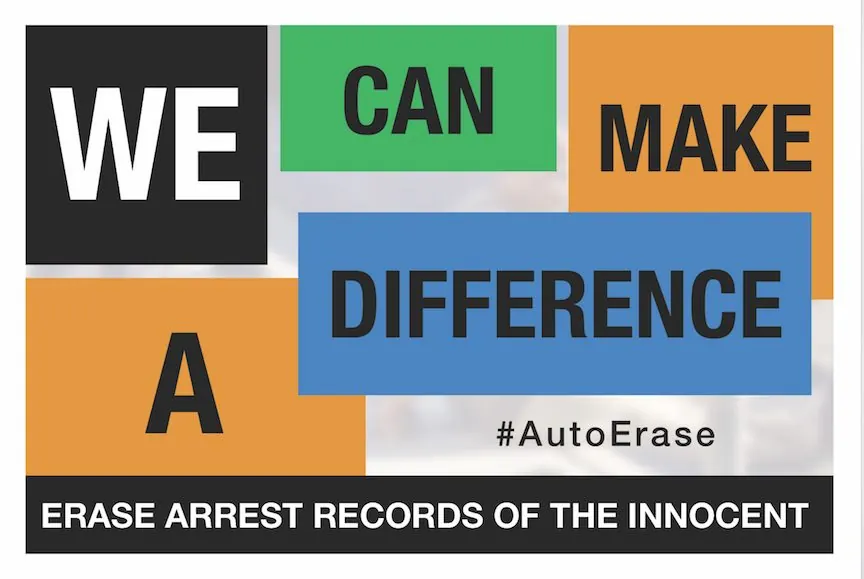
We Can Make A Difference7 states have passed laws from the #AutoErase campaign, since 2014.
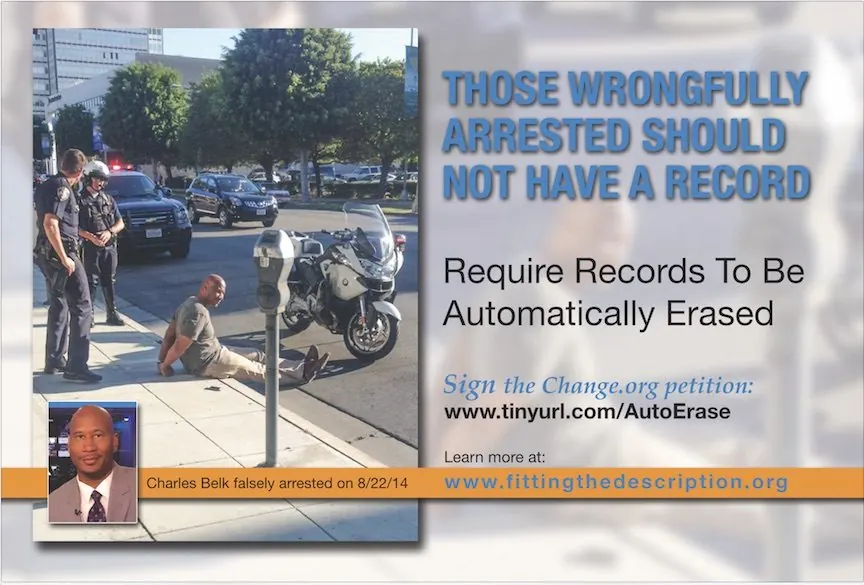
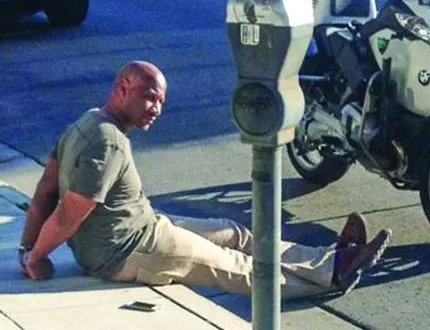
On Aug. 22, 2014, Charles Belk was detained on a Greater Los Angeles curb because he "fit the description" of a bank robbery suspect. Six police cars. Video showed he was the wrong man, and he was released. The arrest record stayed. That is how #AutoErase began. Seven states have since passed laws from his #AutoErase work.
* Pennsylvania courts (AOPC), June 12, 2020: over 34 million cases sealed under the state's Clean Slate law in its first year. The count includes minor convictions (summary offenses) as well as cases that ended without a conviction. Source
Read the whole story Meet the Founder →Being released is not the same as being cleared. An arrest record can follow an innocent person into every background check.
Tap a state.
Watch it spread: each state takes its color in the year the law that puts it in its group was enacted. Laws older than 2007 show from the start. Pick a group above (Auto, Agency-started, On request, Judge decides) to watch only that group. The star marks laws from #AutoErase work.
See your state representative and state senator, then email or message them the 2027 model legislation in two taps.
In 28 states, at least some arrests that don't end in a conviction now clear with nothing to file, for example when charges are dropped or never filed, the case ends in not guilty, or the arrest was a case of mistaken identity. What each law covers varies by state, and some cover only one of these. Cleared can mean erased, sealed or hidden from public view. Not all 28 laws came from #AutoErase. This map is general information, not legal advice. For deeper legal research, see the Collateral Consequences Resource Center's 50-state guide and the Clean Slate Initiative; more groups are listed on our press page.
Two quick questions. General information, not legal advice.
Where your record may be kept, how to get a copy, and how to ask to have it cleared, state by state. General information, not legal advice.
Searches court and arrest records nationwide. You can only search yourself; the company checks your identity. It is not an official copy: for that, use the steps below.
An arrest can be kept in four places. Check each one: clearing it in one place does not always clear it in the others.
Background-check companies must give you a copy of what they report about you, free if you were turned down because of their report in the last 60 days. The rejection notice has to name the company.
Legal aid lawyers and record-clearing clinics can look at your case and fill out the forms with you.
We'll email you at 30, 60 and 90 days to ask whether you heard back, with the next step. One click to stop.
No email? Keep a private plan with check-in dates, calendar files and a follow-up letter.
We use your email only for these reminders.
Seven states have passed laws from the #AutoErase work, with these champions.
The first state to sign an #AutoErase law, at a governor's ceremony in Raleigh.
The first state to file an #AutoErase bill (January 2015).
The agency must ask the court to expunge a mistaken-identity arrest, at no cost.
Seal records within 60 days of finding an arrest wrongful, and notify the person.
Mandatory expungement for mistaken-identity arrests. Charles testified in person.
Carried forward through the NBCSL resolution on #AutoErase.
Eleven years after Rep. John King's first bill. Enacted over a veto.
Three ways in. Each one takes a few minutes.
Bring the 2027 #AutoErase Model Legislation to your chamber. It is free to copy and adapt.
Constituents: tell your own state legislators you want it introduced.
Fund the campaign, and ask your city council or county commission for a proclamation supporting the #AutoErase Model Legislation.
Check your state on the map, ask the arresting agency in writing for your record status, and keep every document you were given at release.
#AutoErase-style bills in current sessions. Checked every week; last checked November 23, 2026.
Automatic expungement within 30 days when a person is released without formal charges, no probable cause is found, or the case is dismissed.
When charges are dismissed because of identity theft or mistaken identity, the court must order the records expunged and agencies must reverse related actions.
Clean slate: automated sealing of eligible records without a petition.
House version of the clean slate bill: automated sealing without a petition.
Clean Slate Act of 2025: federal arrests with no charge filed in 180 days are sealed automatically; acquittals within 60 days.
Senate Clean Slate Act of 2025, with Sen. Rand Paul: the same automatic sealing of federal non-conviction records.
Checked Nov 23, 2026. Most sessions end in early January; bills that don't pass must be filed again.
Built from the strongest parts of today's state laws, for states with no automatic clearing yet. Bracketed numbers are for each state to set.
Searches the #AutoErase 50-state research, checked updates and this site first. If the answer isn't there, it checks Google and labels that clearly. Every question we can't answer gets researched.
Every answer names its source and carries a confidence label. No names, no cookies. How our AI works
Try:
General information, not legal advice. For your own case, talk to a lawyer or local legal aid.
AutoErase™ tools are free: AI help, grounded in the #AutoErase research, to check your record, ask to clear it and write to your lawmakers. General information, not legal advice.
No stories posted yet. Be the first to share yours (anonymously).
A short, anonymous note to your state's lawmakers. A person on the team reviews every postcard before it shows here.
It started with one man on a curb, a Facebook post and a stack of postcards. Here is how #AutoErase got from there to seven state laws.
See the whole story, moment by moment →
Before the room filled, Charles walked the rows and left an #AutoErase card on every seat. Captions in English and Spanish.


Approved facts, quotes and interviews with Charles Belk and the #AutoErase campaign.
Charles is based in Johannesburg; recorded interviews and U.S. morning slots work best.
Comments, questions, corrections, or your own story. We read everything.
Or use this form: it goes straight to the team.